
Documentation navigation
Government Context MCP
Connect Claude.ai
Add the remote server as a custom connector for conversational policy research.
Before you connect
Create a free Government Context account first. Authentication uses a browser OAuth flow: do not create, copy, or paste an API key.
Connect
Claude calls a custom MCP server a custom connector. Custom connectors are available in beta on Free, Pro, Max, Team, and Enterprise plans. Free Claude users can add one custom connector. Your Government Context account can also be free.
The steps below use the Claude desktop app; the web at claude.ai is the same. On Team or Enterprise, an owner adds it once under Organization settings → Connectors.
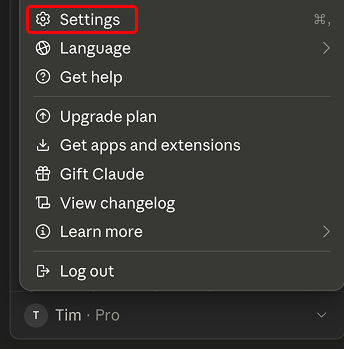
- Open the menu under your name and click Settings.
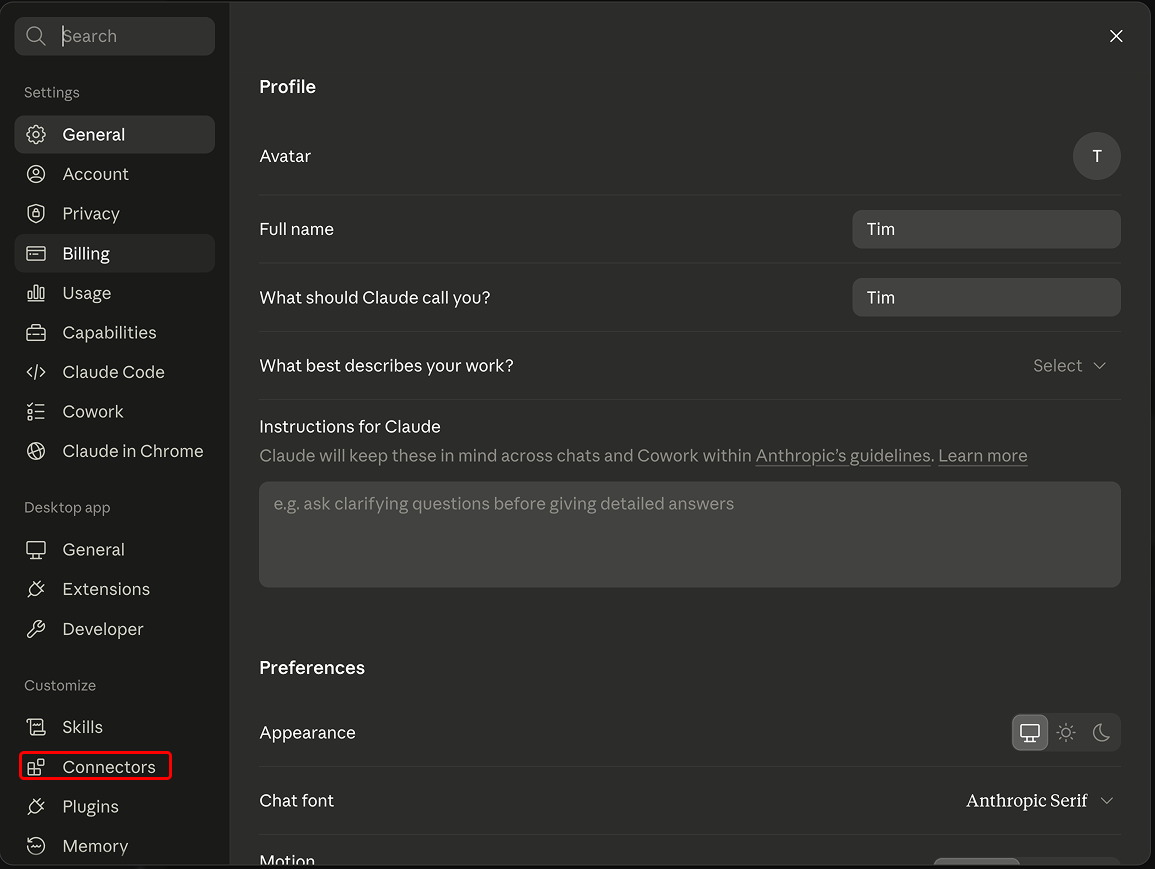
- In the Settings sidebar, click Connectors.
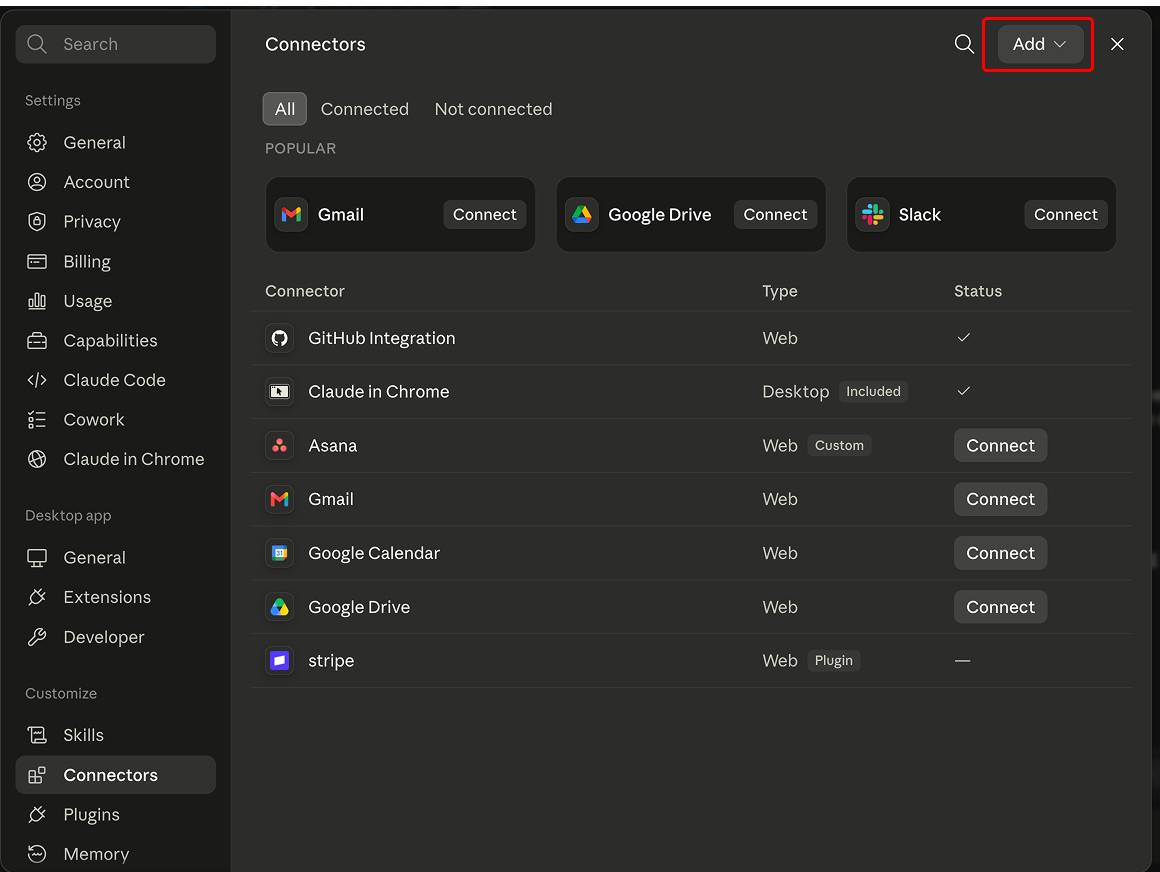
- Click Add at the top right of the Connectors screen.
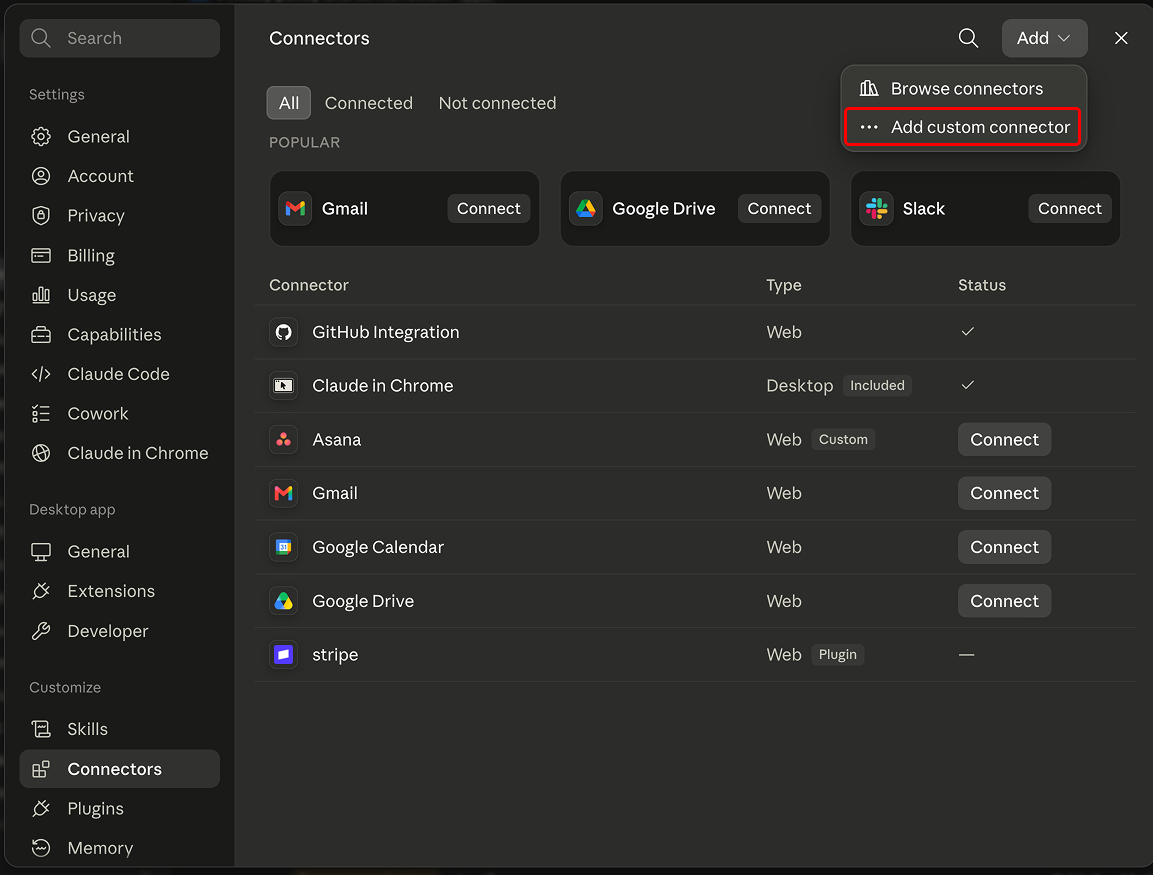
- In the menu that opens, click Add custom connector.
- Fill in the dialog — name it
Government Context, pastehttps://mcp.governmentcontext.comas the URL — then click Add. Leave the OAuth client ID and secret empty: you sign in through your browser in the next step, so there is nothing to paste here.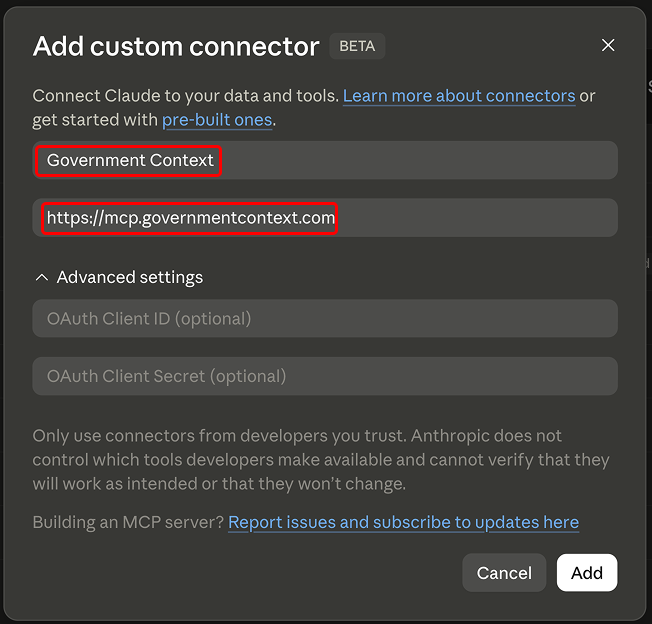
- Claude opens your browser to sign in to Government Context and approve access. Once you approve, the connector shows as connected and the tools are available in a new chat.
Full walkthrough with every screen: How to install Government Context.
Your first query
Start with a research question that makes the server compose search, detail, and comment tools:
Which trade associations oppose the FMCSA broker-transparency rule, and what are their main arguments?
If free-tier data is withheld, the tool result explains what is missing and which paid capability would add it. The agent should relay that note instead of retrying the same request.
Troubleshooting
- Use the bare hostname exactly as shown; do not append
/mcp. - If authorization restarts, reconnect and confirm the intended organization.
- If a tool is missing, confirm it is enabled in the client's connector controls.
- Rate-limit responses include a retry time; wait rather than retrying immediately.